Product Type:Quality Control
Product Introduction:Electric Scooter Quality Control and Product Inspection Quality control in electric scooter manufacturing starts before final ...
Quality control in electric scooter manufacturing starts before final assembly.
A finished vehicle contains mechanical, electrical and electronic components. A problem in any one of these areas can affect the performance of the complete product.
For this reason, quality control should be considered throughout the manufacturing process.
Components should be checked before they enter production.
Depending on the component, inspection may include:
This is particularly important for electrical components because incorrect specifications may not always be visible during visual inspection.
The frame is a major structural component of an electric scooter or e-bike.
Quality checks can include:
The objective is to ensure that the frame matches the approved production specification.
Electrical systems require particular attention.
Depending on the product, inspection can include:
Correct wiring and connector installation are important for both functionality and serviceability.
Battery systems should be checked according to the applicable production and safety requirements.
Inspection can include:
Battery specifications should match the approved production configuration.
The braking and wheel systems are critical mechanical components.
Inspection may include:
The specific inspection procedure depends on the vehicle configuration.
Before shipment, the complete vehicle should be checked as a system.
Functional testing can include:
For selected products, additional road or operational testing may also be used.
Final inspection is the last opportunity to identify production issues before shipment.
A final inspection can cover:
The inspection should be based on the agreed specification.
A common misunderstanding is that quality control means checking the product at the end of production.
Final inspection is important, but it is only one stage.
A stronger manufacturing process considers quality during:
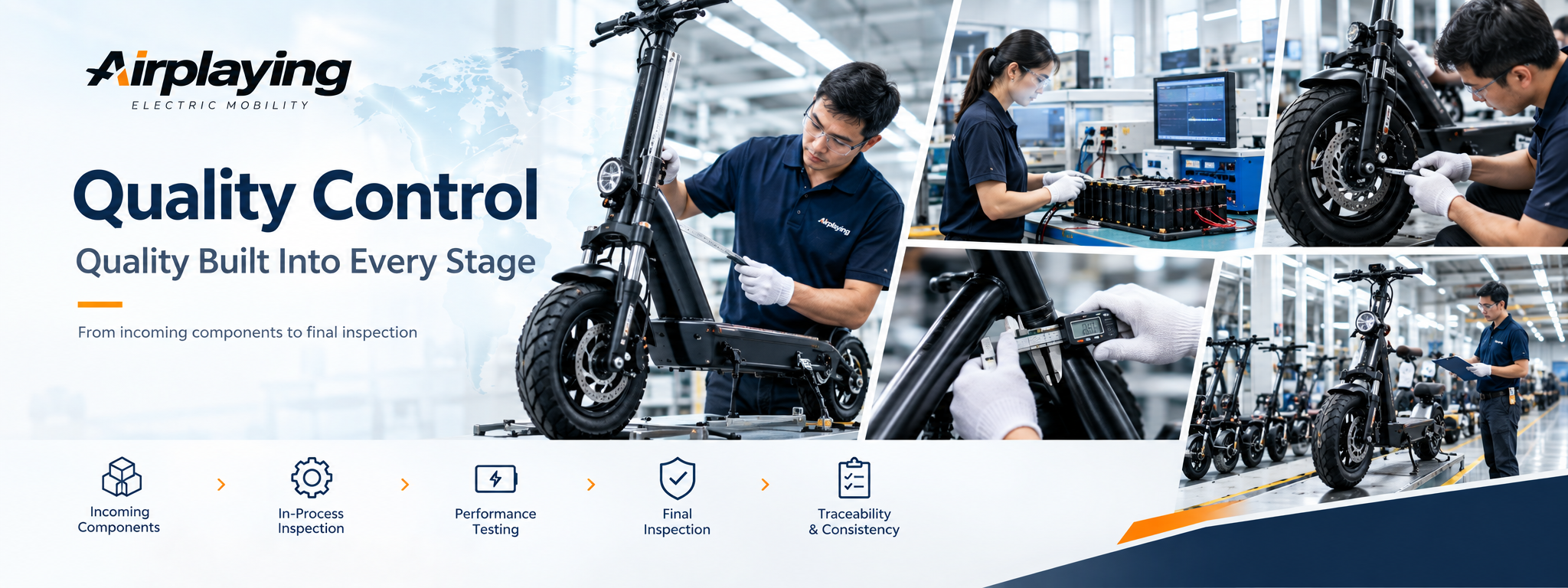
Component sourcing → Incoming inspection → Assembly → Electrical testing → Functional testing → Final inspection → Packaging
This approach can help identify problems earlier, when they are easier and less expensive to correct.
OEM products require additional attention because the final vehicle may contain customized components.
For example, changes to:
can affect other parts of the vehicle.
Therefore, OEM quality control should be based on the customer’s approved specification rather than on a generic product checklist.