Product Type:Buying Guides
Product Introduction:How to Choose an Electric Cruiser: A Practical Buying Guide Choosing an electric cruiser is not simply a matter of finding the...
Choosing an electric cruiser is not simply a matter of finding the biggest motor or the largest battery.
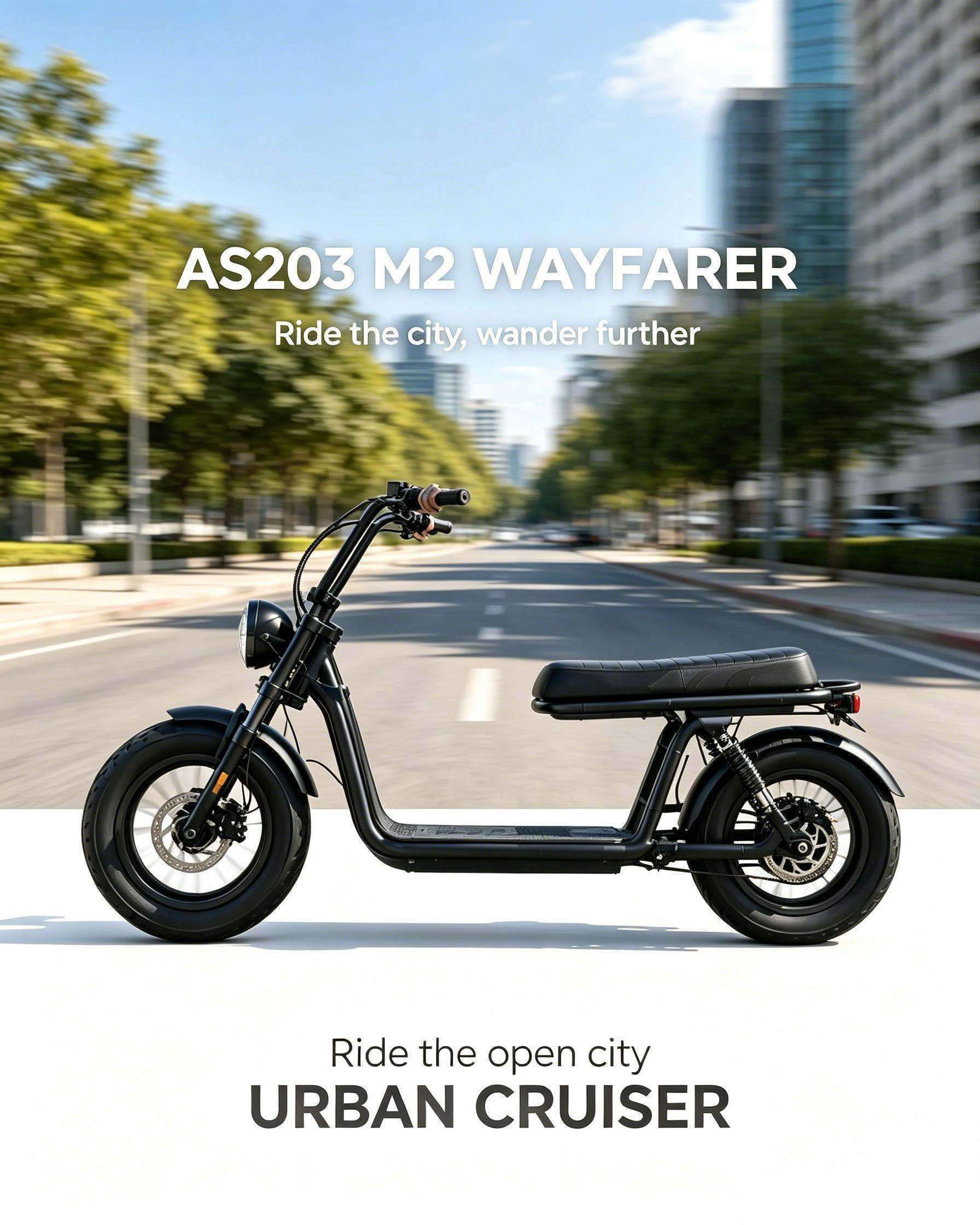
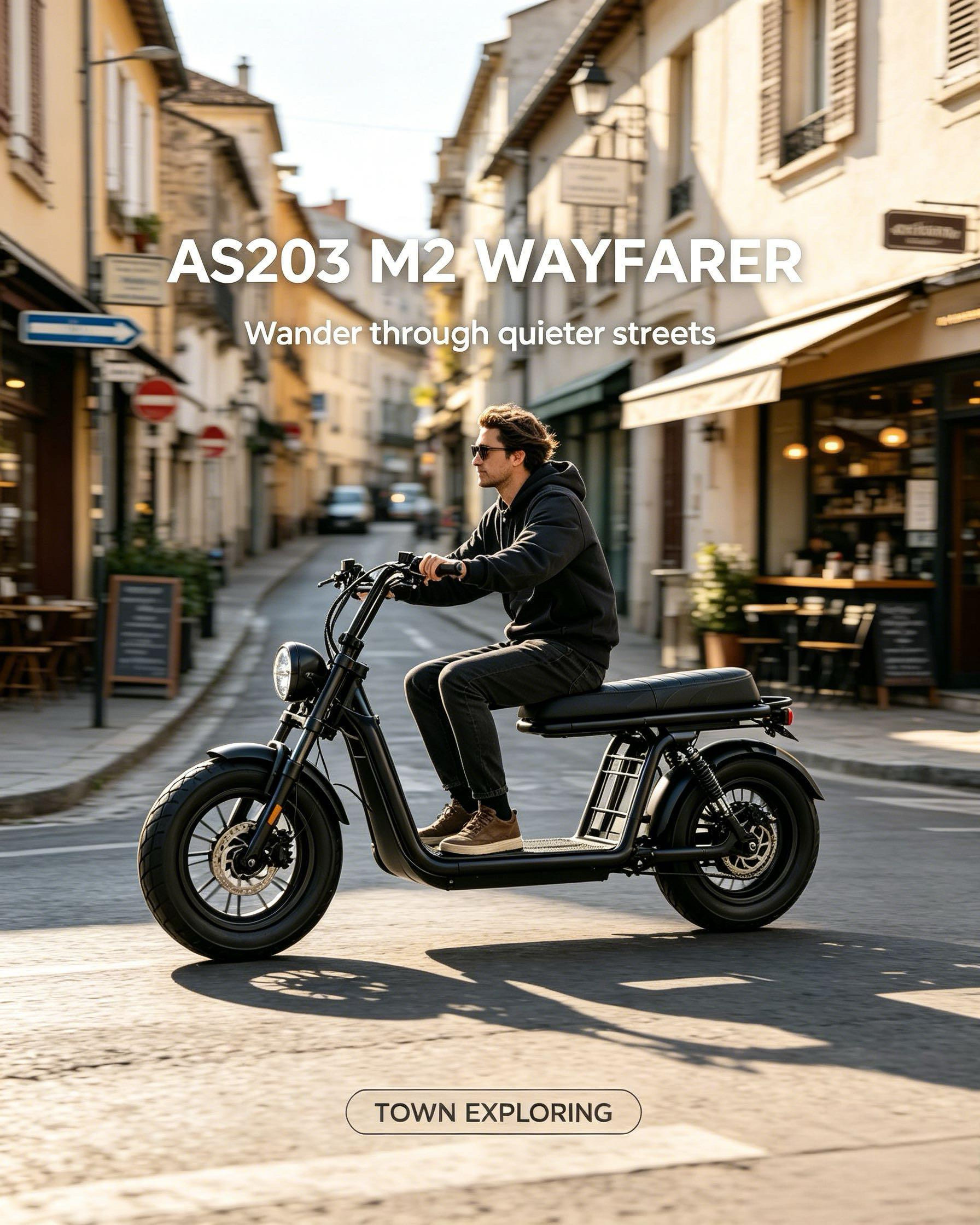
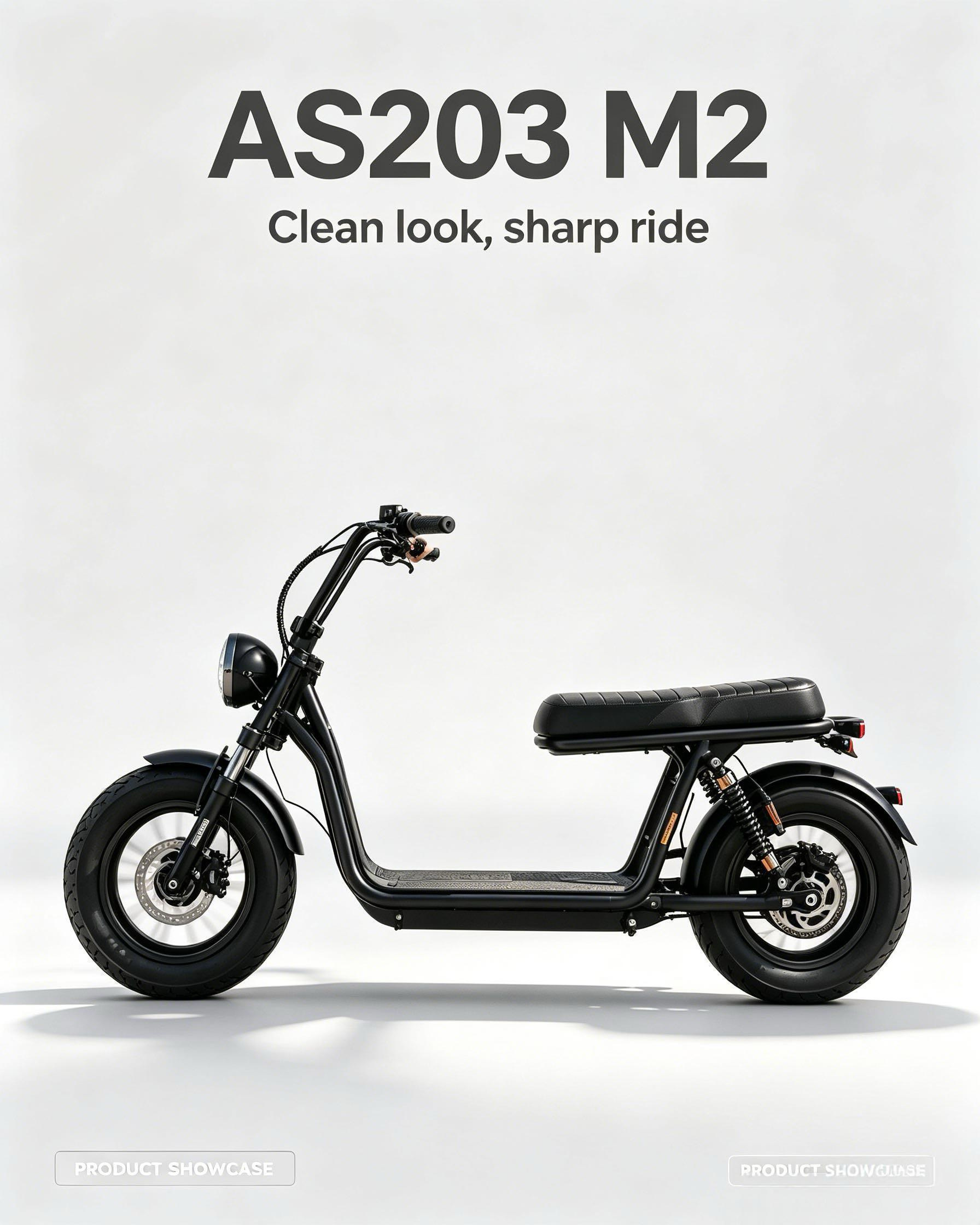
Cruiser-style electric vehicles are built around a different riding experience from lightweight commuter e-bikes. An upright riding position, wider tires, a longer and more relaxed frame, a comfortable seat and stable handling are usually part of the design. At the same time, the motor, battery, brakes and chassis still need to work together as a complete vehicle.
For buyers, distributors and retailers, the more useful question is not “Which electric cruiser has the best specifications?” but:
Which electric cruiser is best suited to the way it will actually be used?
This guide explains the main factors to consider when choosing an electric cruiser, including frame design, motor power, battery capacity, tires, braking systems, riding position, range and the intended application.
Before comparing specifications, define where and how the electric cruiser will be used.
A cruiser designed mainly for paved streets and neighborhood riding does not necessarily need the same configuration as one intended for mixed terrain, long-distance recreational riding or commercial use.
Common applications include:
This is where the difference between an electric cruiser and a conventional commuter e-bike becomes clearer.
A commuter-focused e-bike may prioritize lower weight, compact dimensions and pedaling efficiency. A cruiser generally places more emphasis on riding position, stability and comfort.
For a broader look at where different electric mobility products are used, see our Applications section.
The frame determines much of the riding character of an electric cruiser.
A good cruiser should provide a stable platform without making the vehicle unnecessarily heavy or difficult to handle.
Important dimensions include:
A longer wheelbase can contribute to straight-line stability, while a more compact chassis may feel easier to maneuver at low speed.
The rider’s position is equally important. A more upright position can reduce the forward-leaning posture found on sport-oriented bicycles and is one reason cruisers are commonly associated with comfort.
Cruiser designs also tend to use wider seats and swept-back handlebars. Consumer Reports describes cruiser e-bikes as typically emphasizing an upright seating position, wider tires and cushioned seats.
For a deeper explanation of frame construction, see our Aluminum Alloy Frames technology guide.
Motor power is one of the first specifications buyers usually compare.
It is also one of the easiest to misunderstand.
A 750W motor, for example, does not perform identically in every electric cruiser. Actual performance depends on the battery voltage, controller current, motor characteristics, wheel size, vehicle weight, rider weight and terrain.
A useful way to look at the system is:
Battery → Controller → Motor → Wheel → Tire
All five affect how the vehicle accelerates and climbs hills.
For relatively flat urban cruising, a moderate-power motor may be sufficient. A heavier electric cruiser, larger rider or vehicle intended for hills may require a higher-output motor and a controller capable of supplying the required current.
The important point is to match motor output to the complete vehicle.
Our Motor Systems guide explains the relationship between motor power, voltage, current, torque and real-world performance in more detail.
Motor power tells you about the vehicle’s power output.
Battery capacity tells you how much electrical energy is stored.
These are not the same thing.
Battery energy can be approximately calculated as:
Watt-hours (Wh) = Voltage (V) × Amp-hours (Ah)
For example:
60V × 25Ah = 1,500Wh
A larger battery can provide more available energy, but it does not guarantee a specific riding range.
Actual range depends on:
This is why two electric cruisers with similar battery capacities can produce different real-world results.
Our Battery Systems guide provides more information about battery voltage, capacity, BMS, cells and real-world range.
For many electric cruiser buyers, battery removal is more important than having the largest possible battery.
A removable battery can be charged away from the vehicle, which is useful when the cruiser is stored in a garage, apartment, shop or other location where bringing the entire vehicle to an outlet is inconvenient.
It can also make battery replacement easier over the life of the vehicle.
For commercial buyers, removable batteries can have another advantage: inventory and service management can be simpler when batteries can be replaced without replacing the complete vehicle.
If longer range is required, a dual-battery configuration is another option.
See our Dual Battery guide for a detailed explanation of how two battery packs can be integrated into an electric mobility platform.
Tire size has a noticeable effect on how an electric cruiser feels.
Fat tires are common on cruiser-style electric vehicles because they can provide additional stability and cushioning on uneven surfaces.
A 20 × 4.0 tire, for example, provides a substantially wider contact area than a conventional bicycle tire.
That can be useful for:
However, wider tires also add weight and rolling resistance.
That means a 4-inch tire is not automatically the best option for every electric cruiser.
If most riding takes place on smooth pavement, a narrower tire may roll more efficiently. If stability and mixed-surface comfort are more important, a fat-tire configuration can make more sense.
Our Fat Tire Systems guide explains how tire width, pressure, wheel size and frame design work together.
Brakes should be selected according to the vehicle’s weight and speed, not simply because a particular brake system sounds more advanced.
A heavier and faster electric cruiser has more kinetic energy to manage during braking.
Hydraulic disc brakes are commonly used on higher-performance electric mobility products because they can provide strong braking force and controlled lever feel.
CBS and ABS address different aspects of braking.
CBS, or Combined Braking System, is designed to distribute braking force between wheels.
ABS, or Anti-lock Braking System, is designed to reduce wheel lock during hard braking.
They should not be treated as interchangeable terms.
For a more detailed explanation, see:
When comparing two electric cruisers, look at the complete braking system rather than simply checking whether the specification says “disc brake.”
A cruiser should be comfortable before it is powerful.
Important ergonomic points include:
The correct geometry depends partly on rider height and body proportions.
A low seat can make mounting easier, but too-low positioning can compromise pedaling ergonomics on pedal-equipped designs.
A high handlebar can create a relaxed riding posture, but excessive height or reach can affect steering control.
This is one reason it is useful to look at the complete vehicle geometry instead of choosing a cruiser based only on appearance.
Electric cruisers are often heavier than lightweight commuter e-bikes.
The reason is straightforward.
A cruiser may use:
These components add weight.
A heavier vehicle can feel stable on the road, but it can also be more difficult to carry upstairs, load into a vehicle or move without motor assistance.
For this reason, weight should be evaluated against the intended application.
For a retailer, this also matters for packaging, shipping and warehouse handling.
A professional electric cruiser should be evaluated as an electrical system rather than a collection of individual components.
The main components include:
Battery
Provides stored electrical energy.
BMS
Monitors and protects the battery system.
Controller
Controls electrical power delivered to the motor.
Motor
Converts electrical energy into mechanical movement.
Display / Control System
Allows the rider to monitor and control vehicle functions.
Changing one component can affect the others.
For example, increasing motor power may require a different controller and greater battery discharge capability.
This is why simply upgrading a motor is not always a straightforward modification.
For more information, see our Technical Guides section.
Electric cruisers are increasingly available with digital displays, NFC access, riding modes, cruise control, USB charging, integrated lighting and other electronic functions.
Some of these features can be useful in everyday riding.
For example, a clear display can make speed and battery information easier to monitor. Multiple riding modes can allow the rider to select a softer or stronger power response.
NFC access can provide an alternative to a conventional key system.
But features should be judged by how they affect daily use.
A long specification list does not automatically mean a better electric cruiser.
Our Smart Control Systems guide covers digital displays, NFC, riding modes and other electronic control functions.
Range is one of the most frequently misunderstood electric scooter and e-bike specifications.
A manufacturer may provide a maximum range under controlled conditions, but real-world riding is rarely identical to those conditions.
Range can decrease with:
Instead of asking only “How many miles can it go?”, ask:
How much battery capacity do I need for my normal ride?
If the normal route is 15–20 miles, a moderate battery may be sufficient.
If the vehicle is expected to support long recreational rides, commercial use or extended operation between charges, a larger battery or dual-battery system may be more appropriate.
This is especially important for distributors and retailers.
Electric cruiser regulations are not identical everywhere.
Requirements can vary according to:
For the United States, requirements can also vary between states and jurisdictions. Consumer Reports notes that e-bike regulations vary by state, including requirements related to licensing and helmet use for some higher-powered models.
Therefore, a product that is suitable for one market should not automatically be assumed to be compliant in another.
For commercial sourcing, regulatory requirements should be confirmed before production and shipment rather than after the product arrives.
For an individual rider, choosing the right vehicle is the main concern.
For an importer, distributor or retailer, the manufacturer matters almost as much as the product.
Questions worth asking include:
A supplier that only assembles standard components may have limited ability to make meaningful product changes.
For buyers looking for a customized electric cruiser, our Electric Cruiser OEM page explains the OEM development process in more detail.
For a broader overview of customization, see OEM/ODM.
A specification sheet is useful, but it should be treated as the starting point rather than the final answer.
For example, when evaluating an electric cruiser, consider the following together:
| Category | What to Check |
|---|---|
| Motor | Power, type, torque, controller compatibility |
| Battery | Voltage, Ah, Wh, cells, BMS |
| Range | Test conditions and expected real-world use |
| Tires | Size, width, tread and recommended pressure |
| Frame | Material, geometry, wheelbase and load rating |
| Brakes | Mechanical/hydraulic, rotor size, CBS/ABS |
| Suspension | Front/rear configuration and travel |
| Controls | Display, riding modes, NFC and other functions |
| Weight | Vehicle weight and carrying requirements |
| Application | Commuting, leisure, mixed terrain, commercial use |
| Support | Warranty, spare parts and technical support |
The strongest specification is the one that makes sense as part of the complete vehicle.
If you are comparing several electric cruisers, start with these six questions:
1. Where will the vehicle be used?
Urban roads, recreational paths, gravel, mixed terrain or commercial applications?
2. How far does it normally need to travel?
Choose battery capacity according to actual riding requirements rather than the largest number available.
3. What type of riding experience is expected?
Comfort, stability, acceleration, hill climbing or long-distance cruising?
4. What level of braking performance is appropriate?
Consider vehicle weight, speed, tires and riding environment together.
5. Is the battery removable?
This can make daily charging and long-term service easier.
6. Who is supplying the vehicle?
For a business purchase, manufacturing capability, quality control, spare parts and OEM support can have a significant effect on the total cost of ownership.
An electric cruiser is not necessarily better than a commuter e-bike, fat-tire e-bike or performance electric scooter.
It is designed around a different balance.
A commuter may prioritize efficiency and portability.
A performance scooter may prioritize acceleration and compact power.
A cargo vehicle may prioritize carrying capacity.
An electric cruiser generally places greater emphasis on comfort, stability, relaxed riding position and overall ride experience.
The correct choice depends on the application.
You can compare different vehicle categories in our Product Comparisons section.
The best electric cruiser is not necessarily the one with the highest motor rating, largest battery or longest advertised range.
A well-matched electric cruiser should have a frame appropriate for its intended use, a motor and controller that work together, enough battery capacity for the expected riding conditions, tires suited to the terrain and a braking system appropriate for the vehicle’s weight and speed.
For buyers, the most useful approach is to start with the application and work backward to the specifications.
For businesses, the same principle applies to sourcing.
A successful electric cruiser is the result of matching product design, technology, manufacturing and market requirements rather than maximizing individual specifications.
If you are evaluating an electric cruiser for distribution, retail, rental or private-label development, the next step is to compare the vehicle configuration with your target market and business requirements.