Product Type:OEM Process
Product Introduction:Electric Scooter & E-Bike OEM Process Choosing an OEM manufacturer is only the beginning of a product project. For electr...
Choosing an OEM manufacturer is only the beginning of a product project.
For electric scooters and e-bikes, the development process can involve product selection, specification, customization, engineering, sampling, testing, production and quality control.
A clear OEM process helps both the buyer and manufacturer understand what needs to be decided before production begins.
Airplaying works with distributors, importers, retailers and mobility brands on electric scooter and e-bike OEM/ODM projects, from existing product platforms to more customized product development.
The OEM process is the series of steps used to turn a customer’s product requirement into a finished electric vehicle.
A typical project can follow this structure:
Product Requirement
↓
Platform Selection
↓
Customization
↓
Engineering Review
↓
Prototype / Sample
↓
Testing
↓
Production Specification
↓
Mass Production
↓
Quality Control
↓
Packaging & Shipping
Not every project requires all of these steps.
A private-label project based on an existing product may be relatively straightforward.
A new electric cruiser with a redesigned frame, battery system and electrical architecture requires substantially more development work.
The first step is to understand what the customer actually wants to sell.
A useful product brief should include:
The more complete the initial information, the easier it is to determine whether an existing product can meet the requirement.
For example, a buyer looking for an electric cruiser for recreational riding will have different requirements from a company developing an electric vehicle for delivery fleets.
The next question is whether an existing product is already close to the desired specification.
Starting from an existing platform can reduce development time and unnecessary engineering work.
For example, a buyer interested in a fat-tire electric cruiser can evaluate platforms such as AS201 or AS203 M2 Wayfarer before deciding whether a completely new frame is necessary.
The evaluation should include:
The objective is not to choose the product with the highest specification.
The objective is to find the platform that requires the fewest unnecessary changes to meet the intended market requirement.
Once the base platform has been selected, the customization requirements can be defined.
Customization may include:
At this stage, it is important to distinguish between a visual customization and an engineering change.
Changing the frame color is relatively simple.
Changing the frame structure is a different type of project.
Engineering review becomes important when the customer requests changes to the product itself.
Examples include:
Engineers need to determine whether the requested changes are compatible with the existing platform.
For example, increasing battery capacity may require a different battery enclosure.
Increasing motor power may require reviewing the controller, battery, wiring, brakes and thermal requirements.
A good OEM process therefore evaluates the vehicle as a complete system rather than treating each component separately.
For projects involving significant changes, a prototype or engineering sample may be required.
The sample allows the buyer to check:
The purpose of the sample is not only to confirm that the product looks correct.
It is also an opportunity to identify problems before mass production.
Testing requirements depend on the product and target market.
Possible testing areas include:
For export projects, the applicable regulations and certification requirements should be identified according to the destination market.
This should happen before the product specification is finalized.
Before mass production, the product should have a clearly defined production specification.
This can include:
This specification becomes the reference for production.
It is particularly important for repeat orders because the buyer needs the same product specification to be maintained across different production batches.
Once the product specification and commercial terms are confirmed, production can begin.
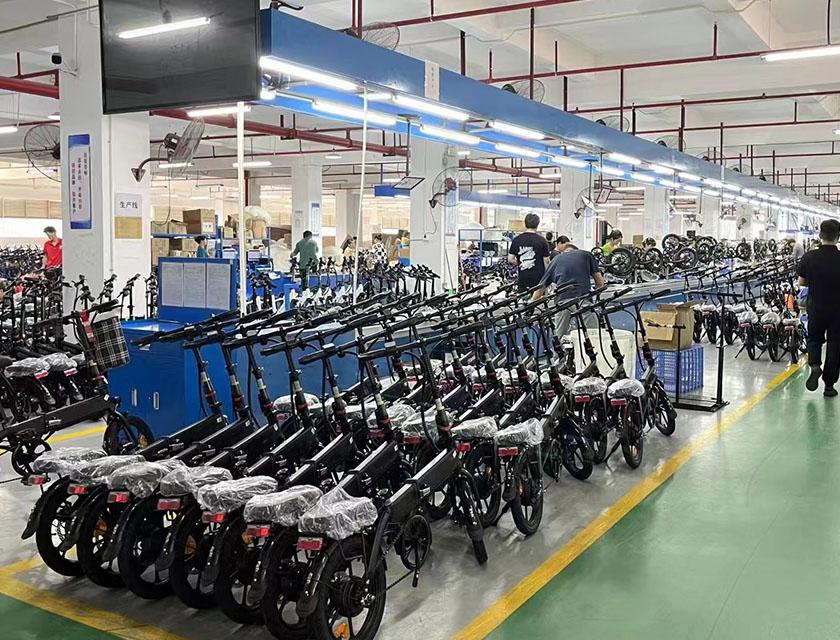
A typical manufacturing sequence may include:
Component Preparation
→
Frame Production
→
Surface Treatment
→
Electrical Assembly
→
Vehicle Assembly
→
Functional Testing
→
Final Inspection
→
Packaging
The exact sequence varies according to the product.
Quality control should not be limited to the final inspection.
For electric mobility products, quality can be checked at different stages.
Battery, motor, controller, tires, brakes and other components can be inspected before assembly.
Dimensions, welding and finishing can be checked according to the production specification.
Connections, display, lighting, motor operation and charging functions can be checked.
Brakes, wheels, suspension, controls and other components can be inspected before shipping.
The completed vehicle can undergo functional inspection before packaging.
The exact inspection procedures depend on the product and customer requirements.
After final inspection, the products are prepared for shipment.
B2B customers should confirm:
Battery-powered products require additional consideration during transportation, so shipping requirements should be considered early in the project.
OEM and ODM are often used interchangeably, but they describe somewhat different relationships.
The customer normally provides more of the product requirements or specification.
The manufacturer produces the product according to the agreed requirements.
The manufacturer contributes more of the product design and engineering.
The customer may provide the market requirement rather than a complete engineering specification.
In practice, electric mobility projects often combine the two.
For example:
Existing Airplaying Platform
Customer Requirements
Engineering Modifications
Customer Branding
can become a hybrid OEM/ODM project.
There is no single OEM development timeline.
A project based on an existing model may require relatively little development.
A project involving:
will require considerably more time.
The main factors are:
The best way to estimate a timeline is to define the product scope first.
An existing platform may be appropriate when:
For example, a company looking for a fat-tire electric cruiser may find that an existing platform already meets most of its requirements.
In that case, developing a completely new vehicle may add cost and time without creating enough additional market value.
A deeper ODM project may make sense when the existing platforms cannot meet important requirements.
This may include:
The more significant the changes, the more important prototype validation becomes.
The first step is to define the target market, application, product requirements, branding requirements and expected order quantity.
Not necessarily. An OEM/ODM project can start from an existing product, technical specification, product concept or simple requirements brief.
Yes. Existing platforms can often be customized in terms of branding, colors, components, battery configuration, accessories and packaging.
For substantial engineering changes, a prototype or pre-production sample is strongly recommended.
Certification and regulatory requirements should be considered before the final product specification is frozen.
Yes. This can be a practical product strategy.
A company can first test the market with an existing platform and later invest in deeper product development once demand has been established.
If you already have a product specification, send it to us.
If you only have an idea, that is also enough to start the discussion.
Useful information includes:
Product type · Target market · Key specifications · Branding requirements · Estimated quantity
Airplaying can then evaluate whether an existing platform, customized OEM product or deeper ODM development is the most appropriate approach.