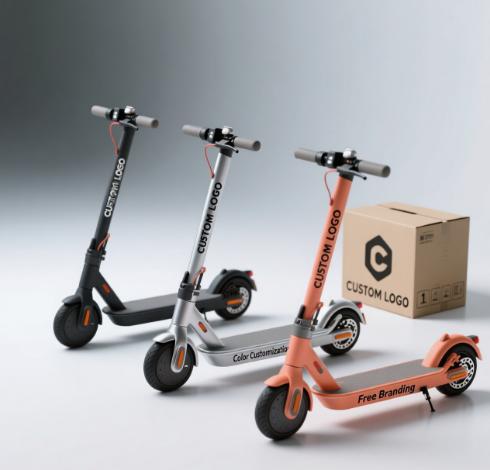
Product Type:Private Label
Product Introduction:Private Label Electric Scooters & E-Bikes Private label manufacturing allows a company to sell an electric scooter or e-bi...
Private label manufacturing allows a company to sell an electric scooter or e-bike under its own brand without developing an entirely new vehicle from the beginning.
For distributors, retailers, importers and emerging mobility brands, private label can provide a relatively direct way to enter the electric mobility market.
The manufacturer provides the production platform, while the customer develops the brand, market strategy and sales channels.
Airplaying supports private-label projects for electric scooters, electric cruisers and electric bikes.
A private-label electric scooter is manufactured by one company and sold by another company under its own brand.
The underlying product may be an existing model or a product with selected customization.
A typical private-label project can include:
The level of customization depends on the product and order requirements.
Private label and OEM are related, but they are not exactly the same.
A typical private-label project looks like:
Existing Product
Customer Branding
Custom Packaging
↓
Customer’s Product
An OEM project can go further:
Existing Platform
Customer Specification
Component Changes
Engineering Changes
Branding
↓
Customized OEM Product
Therefore, private label is often the simpler starting point.
OEM is more appropriate when the customer needs specific technical changes.
Developing an electric vehicle completely from scratch requires:
A private-label project can use an existing manufacturing platform instead.
This allows the brand to concentrate its resources on:
For a company entering the market for the first time, this can reduce development complexity.
Private-label customization usually focuses on the elements that customers see and interact with.
Logos can be placed on suitable product areas depending on the vehicle design.
Potential locations may include:
The exact locations should be confirmed during the artwork and sample process.
Customers can request specific frame or component colors according to their brand identity.
For larger production quantities, color matching should be confirmed against an agreed reference before production.
Graphics can be developed around the customer’s brand identity.
This can include:
Private-label packaging can include:
Packaging is particularly important for online brands because the carton is often the first physical contact between the customer and the product.
Electric cruisers are one potential category for private-label development.
They offer a different positioning from lightweight commuter scooters and can be marketed around:
Airplaying’s AS201 and AS203 M2 Wayfarer can be evaluated as potential platforms for brands interested in this category.
The two products represent different platform characteristics, so the selection should be based on the target market rather than simply choosing the newer model.
Private-label e-bikes cover a much broader range of products.
Depending on the market, a brand may be interested in:
The product should be selected according to:
For example, a youth electric bike requires a very different product strategy from an adult fat-tire electric bike.
A private-label product should have consistent branding across the entire customer experience.
This can include:
Vehicle
→ Logo and color
Packaging
→ Carton and shipping materials
Documentation
→ Manual and warranty
Website
→ Product photography and product naming
Marketing
→ Brand story and product positioning
If only the logo changes while everything else remains generic, the product may still feel like a standard factory model.
A stronger private-label strategy creates consistency between the physical product and the brand that sells it.
The first step should not be choosing a logo.
It should be choosing the correct product.
A useful selection process is:
Target Customer
↓
Application
↓
Product Category
↓
Product Platform
↓
Customization
↓
Branding
For example:
A company targeting recreational adult riders may consider an electric cruiser.
A company targeting children requires a youth platform.
A rental company may prioritize a different configuration based on durability and maintenance.
This prevents the common mistake of selecting a product first and trying to find a market afterward.
MOQ is an important consideration for private-label projects.
The required quantity may depend on the level of customization.
A standard product with simple branding can be easier to produce at a lower volume than a product requiring:
Therefore, MOQ should be discussed together with the customization scope rather than considered as a completely separate issue.
Private label does not have to remain a permanent business model.
It can also be the first stage of a longer product strategy.
For example:
Stage 1
Existing product + own branding
↓
Stage 2
Branding + selected components
↓
Stage 3
Custom product configuration
↓
Stage 4
New product development
This allows a company to test market demand before making a larger investment in engineering.
For a growing mobility brand, this can be a more controlled way to develop a proprietary product line.
The difference can be summarized simply.
Private Label
Existing product
+
Branding
+
Packaging
Custom OEM
Existing platform
+
Technical customization
+
Branding
ODM Product Development
Product requirement
+
Engineering
+
Prototype
+
Testing
+
Production
The appropriate approach depends on how different the final product needs to be from the existing platform.
It is an electric scooter manufactured by a supplier and sold under another company’s brand.
Yes. Logo placement and branding can be customized according to the product platform.
Custom colors may be available depending on the product and production quantity.
Yes. Private-label packaging can include custom cartons, labels, manuals and warranty materials.
It can reduce development cost and complexity because the project starts with an existing product platform. Actual pricing depends on product configuration, customization and order quantity.
Selected battery configurations may be customized depending on the platform and technical requirements.
Yes. This is one practical route for companies that want to test the market before investing in deeper product development.
At minimum:
If you already have a brand, the next step is to select the right product platform.
If you are still deciding which type of electric vehicle to launch, provide your target market, customer profile and intended application.
Airplaying can evaluate whether an existing product, private-label configuration or deeper OEM/ODM development is the better starting point.
Discuss Your Private Label Project