Product Type:CBS / ABS Braking Systems
Product Introduction:CBS and ABS Braking Systems for Electric Scooters: Understanding the Difference Braking performance becomes increasingly impor...
CBS and ABS Braking Systems for Electric Scooters: Understanding the Difference
Braking performance becomes increasingly important as electric scooters become faster, heavier and more powerful.
Modern electric mobility products may use mechanical disc brakes, hydraulic disc brakes, CBS or ABS systems depending on vehicle configuration and market requirements.
CBS and ABS should not be treated as the same technology.
CBS stands for Combined Braking System.
The basic principle is that braking input can be distributed between the front and rear wheels instead of relying entirely on one wheel.
This can help provide more balanced braking behavior and reduce the likelihood of an inexperienced rider applying excessive braking force to only one wheel.
For utility-focused electric scooters and electric bikes, balanced braking can be particularly useful during everyday riding.
ABS stands for Anti-lock Braking System.
Its purpose is different from CBS.
ABS is designed to help prevent wheel lock during hard braking by monitoring wheel behavior and controlling hydraulic or braking pressure.
When a wheel approaches a locking condition, the system can reduce and reapply braking pressure rapidly.
This can help the rider maintain greater directional control during emergency braking, particularly when traction is limited.
The two systems solve different problems.
CBS focuses on brake-force distribution.
ABS focuses on wheel-lock prevention.
A vehicle can therefore be equipped with one or, depending on system architecture and applicable requirements, a combination of braking technologies.
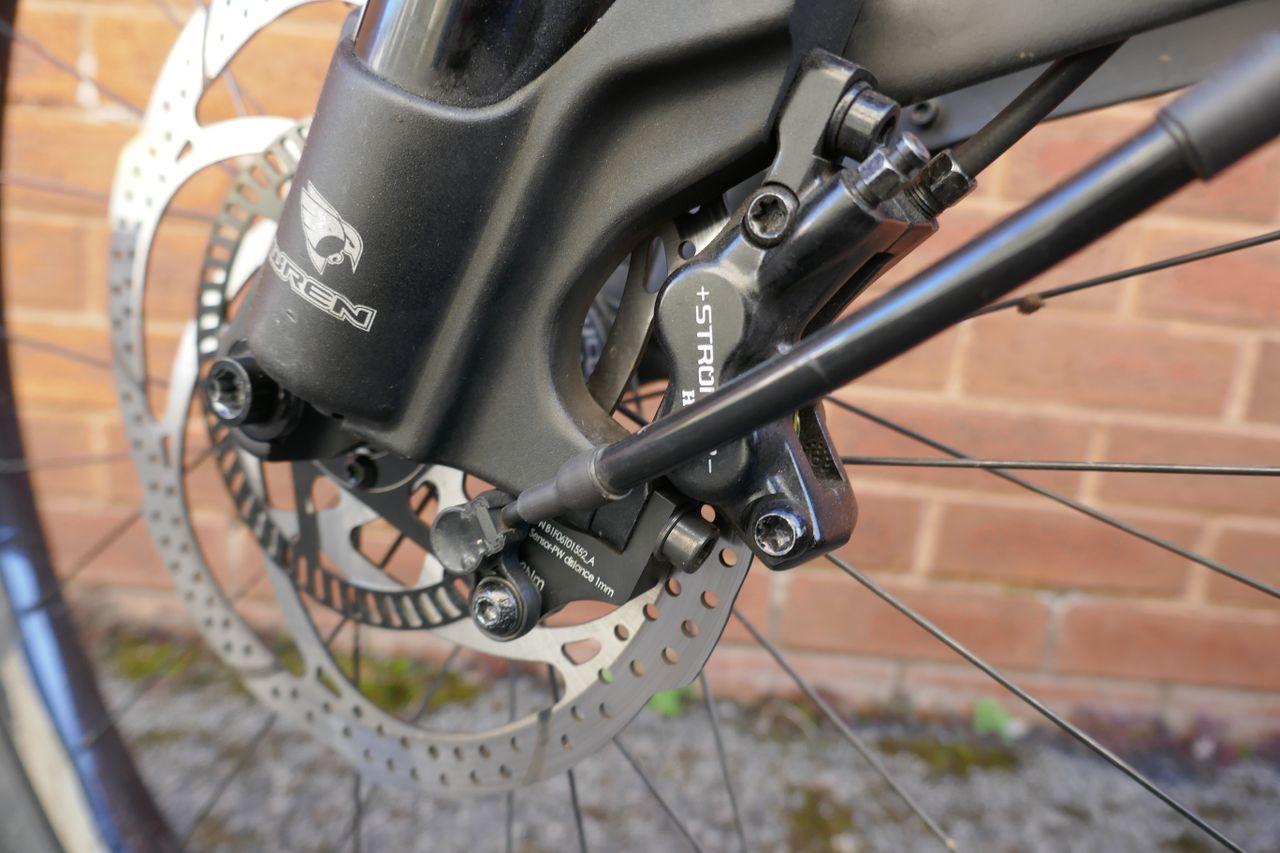
Hydraulic disc brakes are commonly used on higher-performance electric scooters and electric bikes because they can provide strong braking force with relatively precise control.
The hydraulic system transfers brake lever force through fluid pressure rather than a conventional mechanical cable.
Advantages can include:
For heavier electric cruisers or high-power electric scooters, hydraulic braking can be particularly relevant.
A 500W urban e-bike and a 2,000W electric cruiser should not necessarily use the same braking configuration.
Braking design should consider:
The braking system should therefore be designed as part of the complete vehicle architecture.
CBS and ABS are not marketing labels that can replace proper engineering.
A professional electric scooter manufacturer should match the braking system to the vehicle’s speed, mass, tire configuration, powertrain and intended application.