Product Type:Fat Tire Systems
Product Introduction:Fat Tire Systems for Electric Scooters and E-Bikes: Traction, Stability and Ride Comfort Fat tires have become a recognizable ...
Fat tires have become a recognizable feature of electric bikes and electric cruisers, but their purpose is not purely visual.
A properly designed fat tire system can influence traction, ride comfort, stability and the vehicle’s ability to handle uneven surfaces.
Fat tires are significantly wider than conventional bicycle or scooter tires.
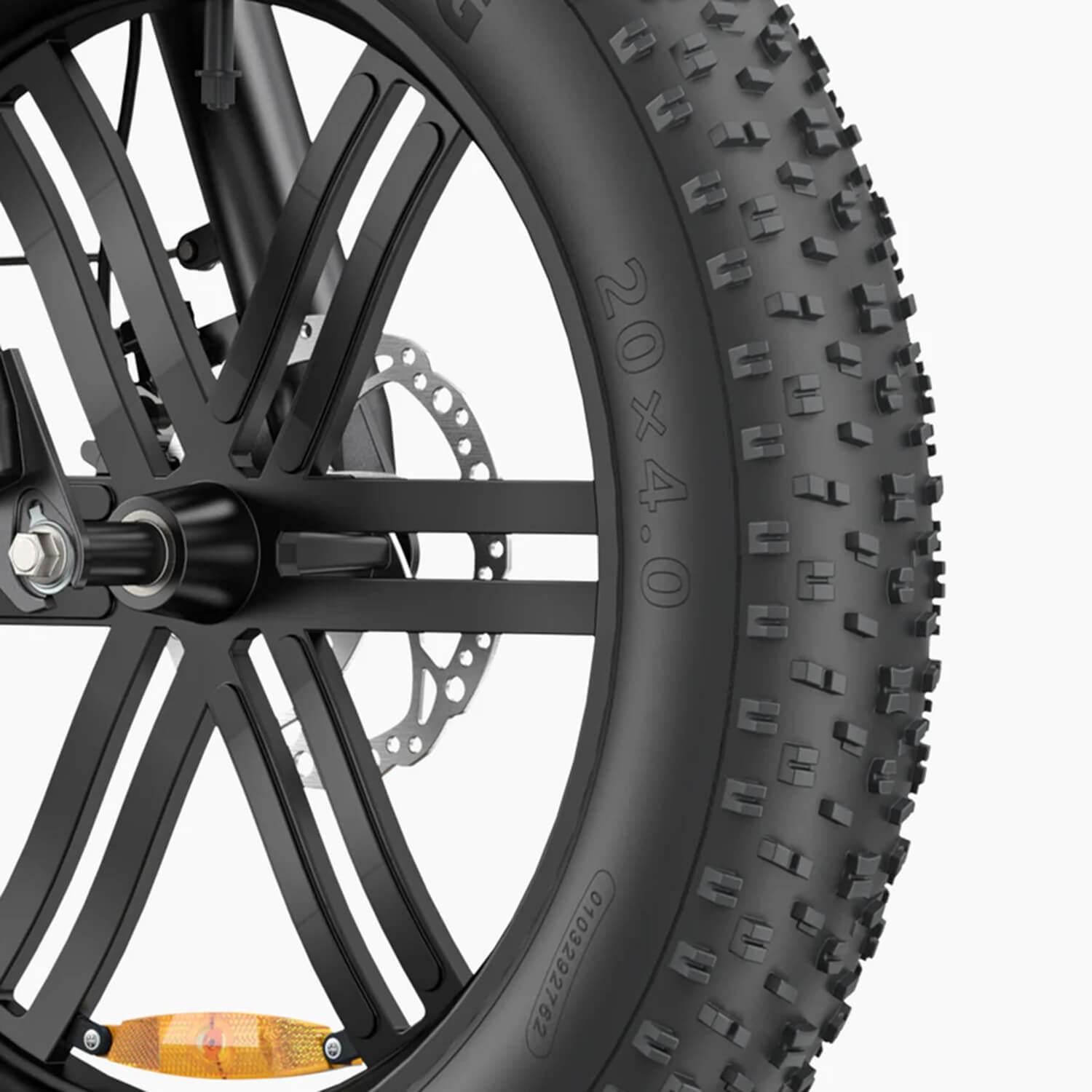
A common configuration for electric mobility products is 20 × 4.0 inches.
The wider contact area can provide additional traction and can also allow the tire to operate at relatively low pressure, depending on tire construction and application.
A wider tire can be useful on surfaces such as:
However, wider does not automatically mean better in every situation.
Tire pressure, tread design, rubber compound, wheel construction and suspension all influence actual performance.
One reason riders prefer fat-tire electric bikes is the additional cushioning effect created by the larger air volume.
When correctly inflated, the tire can absorb some small impacts before those forces reach the suspension and frame.
This can contribute to a smoother ride on imperfect roads.
Fat tires should not simply be inflated to maximum pressure.
The appropriate pressure depends on:
Too much pressure can make the ride unnecessarily harsh and reduce the tire’s ability to conform to uneven surfaces.
Too little pressure can increase rolling resistance and potentially affect handling.
The tire is only one part of the system.
The complete design includes:
For example, a 20 × 4.0 tire requires sufficient frame and fork clearance.
Therefore, fat-tire design should start with the complete chassis rather than simply changing the tire after the frame has already been developed.
Fat tires can provide useful advantages in traction, stability and comfort, especially for electric cruisers and mixed-terrain electric bikes.
But the best result comes from matching tire dimensions, pressure, suspension, frame geometry and motor performance as one integrated system.