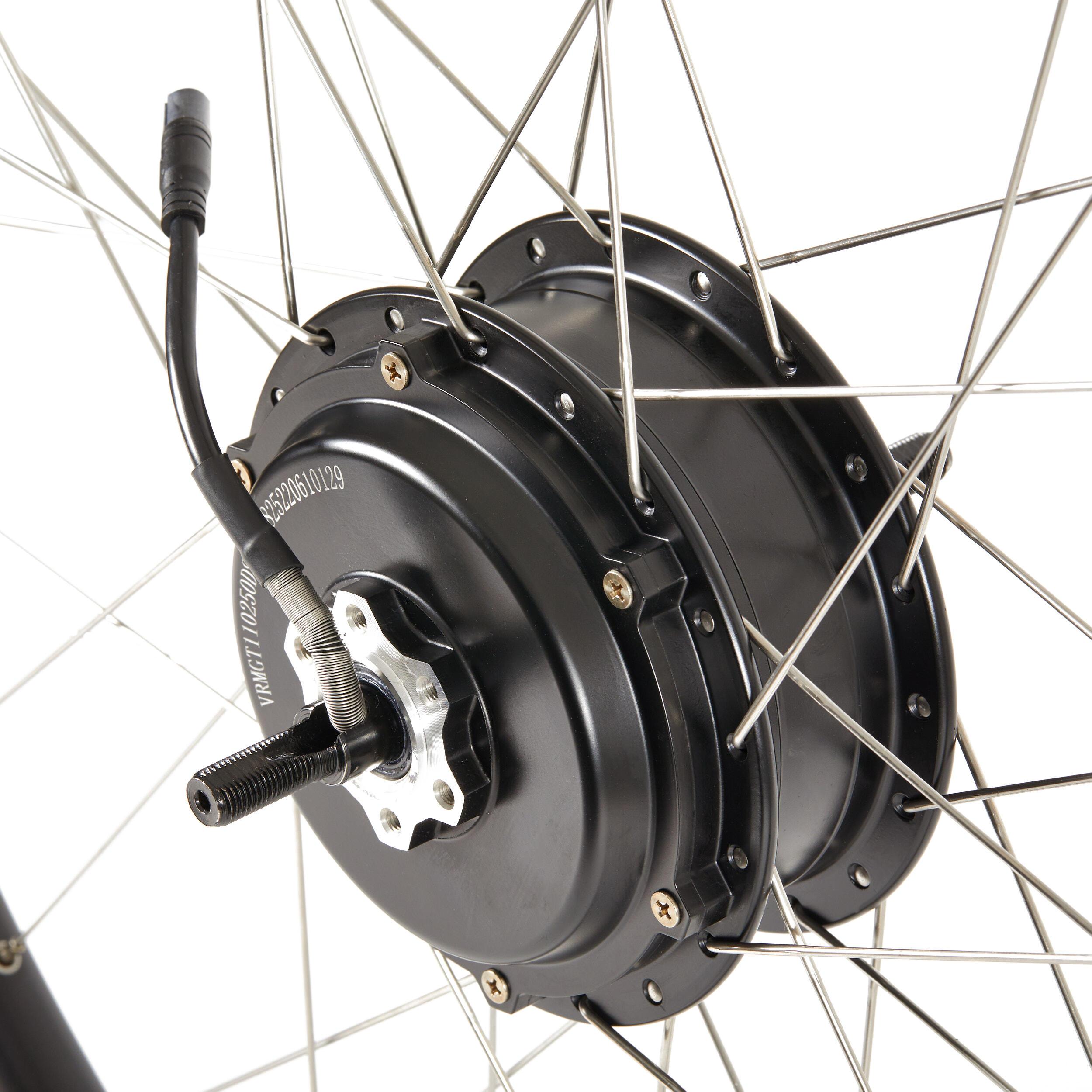
Product Type:Motor Systems
Product Introduction:Electric Scooter Motor Systems: Power, Torque, Efficiency and Real-World Performance The motor is one of the most visible spec...
Electric Scooter Motor Systems: Power, Torque, Efficiency and Real-World Performance
The motor is one of the most visible specifications on an electric scooter, but wattage alone does not explain how a vehicle will perform.
Two motors with the same nominal power rating can produce different riding characteristics because of differences in motor design, winding, controller configuration, battery voltage, wheel size and vehicle weight.
Hub motors are integrated into the wheel.
They are popular in electric scooters and e-bikes because the drivetrain is relatively compact and mechanically simple.
Advantages can include:
Hub motors can be designed for both urban and performance applications.
A geared hub motor uses internal gearing to provide a different balance between torque, size and efficiency.
Geared motors can be useful when strong low-speed torque is important while maintaining a relatively compact motor package.
This can be particularly relevant for:
A motor rated at 2,000W does not necessarily produce the same performance in every vehicle.
Real-world performance depends on:
Battery voltage + battery discharge capability + controller current + motor characteristics + wheel size + vehicle weight + riding conditions.
This is why a professional manufacturer should evaluate the entire powertrain.
Higher system voltage can allow the same power level to be achieved with lower current.
For example, electrical power can be expressed approximately as:
Power = Voltage × Current
Therefore, increasing system voltage can be one method of designing a higher-power electrical system while managing current requirements.
However, higher voltage also affects battery design, controller selection, electrical insulation, charging systems and applicable regulations.
The motor and controller should be selected together.
The controller determines how much current is supplied to the motor under different conditions.
If the controller is incorrectly matched, the vehicle may experience:
For this reason, “2000W motor” should never be evaluated independently from the controller and battery system.
For OEM and ODM projects, motor selection should start with the intended application.
A manufacturer may need to consider:
A motor designed for an urban commuter does not necessarily make sense for a high-power electric cruiser.
Motor wattage is useful, but it is only one part of an electric vehicle’s powertrain.
The better question is not “How many watts is the motor?” but “How does the complete motor, controller and battery system perform in the intended vehicle?”