Product Type:Smart Control Systems
Product Introduction:Smart Control Systems for Electric Scooters and E-Bikes Modern electric scooters are increasingly becoming electronic systems ...
Modern electric scooters are increasingly becoming electronic systems rather than simple motorized bicycles.
The rider interacts with the vehicle through displays, switches, sensors, controllers and electronic access systems.
Together, these components form the smart control architecture.
A smart control system manages how the rider interacts with the electric vehicle.
Depending on the product, this can include:
The objective is not to add electronics simply for appearance.
A useful smart system should make the vehicle easier to understand and operate.
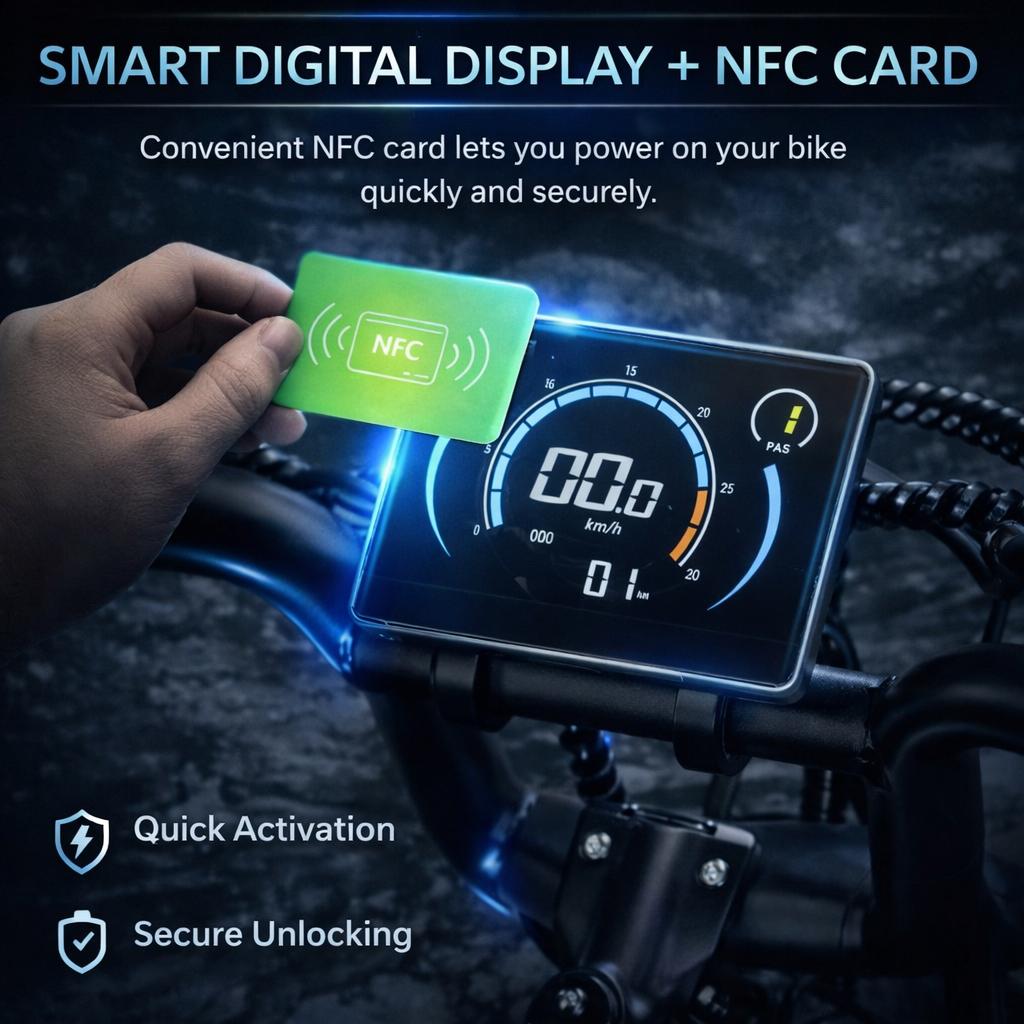
NFC-based unlocking allows the rider to authenticate the vehicle using a compatible NFC card or device.
Compared with a traditional mechanical key, electronic access can provide a more modern user interface and can be integrated into a broader smart-control architecture.
For commercial products, electronic access can also become useful when additional fleet-management functions are developed.
Different riding modes can change how the vehicle responds to throttle input and controller output.
Typical configurations may include:
The exact behavior depends on controller programming.
A lower-power mode can provide smoother acceleration and potentially lower energy consumption, while a sport mode can prioritize stronger response.
The important point is that riding modes should be calibrated around the actual motor, controller and battery system.
A digital display can provide information such as:
Good display design is about readability rather than the number of functions.
The rider should be able to understand the most important information quickly while riding.
A smart interface is only the visible part of the system.
Behind it are:
Display → Controller → Motor → Battery → Sensors
These components need to communicate correctly.
If the display shows inaccurate battery information or the riding mode does not correspond correctly with controller output, the system becomes more complicated without becoming more useful.
For OEM customers, smart-control features can also become part of product differentiation.
Possible customization areas include:
The level of customization depends on the selected electrical architecture.
Smart control technology should improve the relationship between rider and vehicle.
For electric scooter and e-bike manufacturers, the goal is not to make the product appear more complicated. It is to make vehicle information, power control, access and daily operation more intuitive.