Product Type:Product Comparisons
Product Introduction:60V vs. 48V Electric Vehicles: What Does Voltage Actually Change? Voltage is one of the most visible specifications in electri...
Voltage is one of the most visible specifications in electric mobility.
48V systems are common in many e-bikes and light electric vehicles, while 60V systems are increasingly used in higher-performance platforms.
But higher voltage does not automatically mean a better vehicle.
The correct question is whether the electrical architecture matches the power requirement.
The basic relationship is:
Power = Voltage × Current
For a theoretical 2,000W load:
48V requires approximately 41.7A.
60V requires approximately 33.3A.
Real systems are more complicated because battery voltage changes under load and controllers have efficiency losses.
Nevertheless, the example shows why higher voltage can be useful as power increases.
Voltage and battery capacity should not be confused.
Battery energy is approximately:
Voltage × Amp-hours = Watt-hours
A 60V 25Ah battery provides approximately:
1,500Wh nominal energy
A 48V 25Ah battery provides approximately:
1,200Wh nominal energy
This does not mean the 60V system will travel exactly 25% farther.
Real range depends on speed, terrain, rider weight, temperature, tire pressure, controller settings and many other factors.
No.
Top speed is influenced by:
Voltage is one variable.
Not by itself.
Range is primarily related to usable energy and energy consumption.
A 48V battery with greater Ah capacity can contain more energy than a smaller 60V battery.
That is why serious comparisons should use watt-hours rather than amp-hours alone.
For a high-power electric cruiser, the electrical system needs to handle substantial power.
A 60V architecture can provide a useful balance between power capability and current requirements.
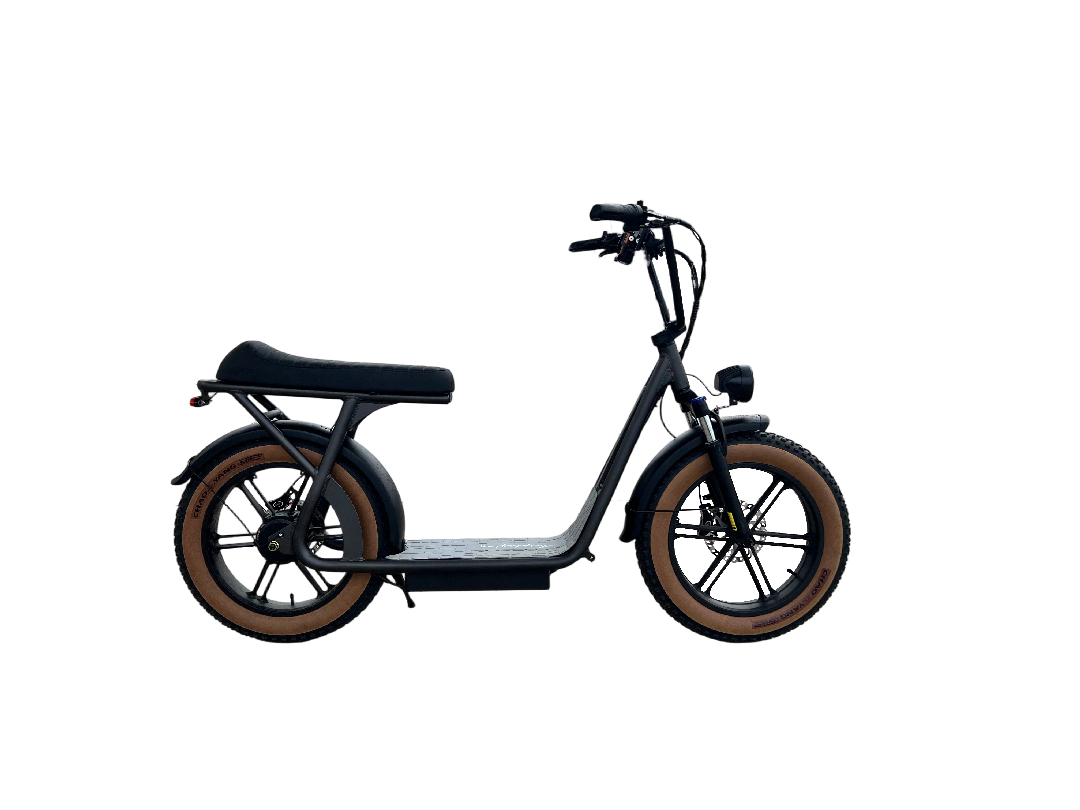
The AS203 uses a 60V platform for its 1500W and 2000W configurations.
The point is not that 60V is inherently superior.
The point is that it is appropriate for the intended performance level of the platform.
Is 60V better than 48V?
Neither voltage is universally better. The appropriate system depends on motor power, battery capacity, controller design and intended use.
How much energy is in a 60V 25Ah battery?
Approximately 1,500Wh of nominal energy.
Does a 60V electric bike go faster than a 48V electric bike?
Not automatically. Motor characteristics, controller settings, wheel size and other factors determine speed.