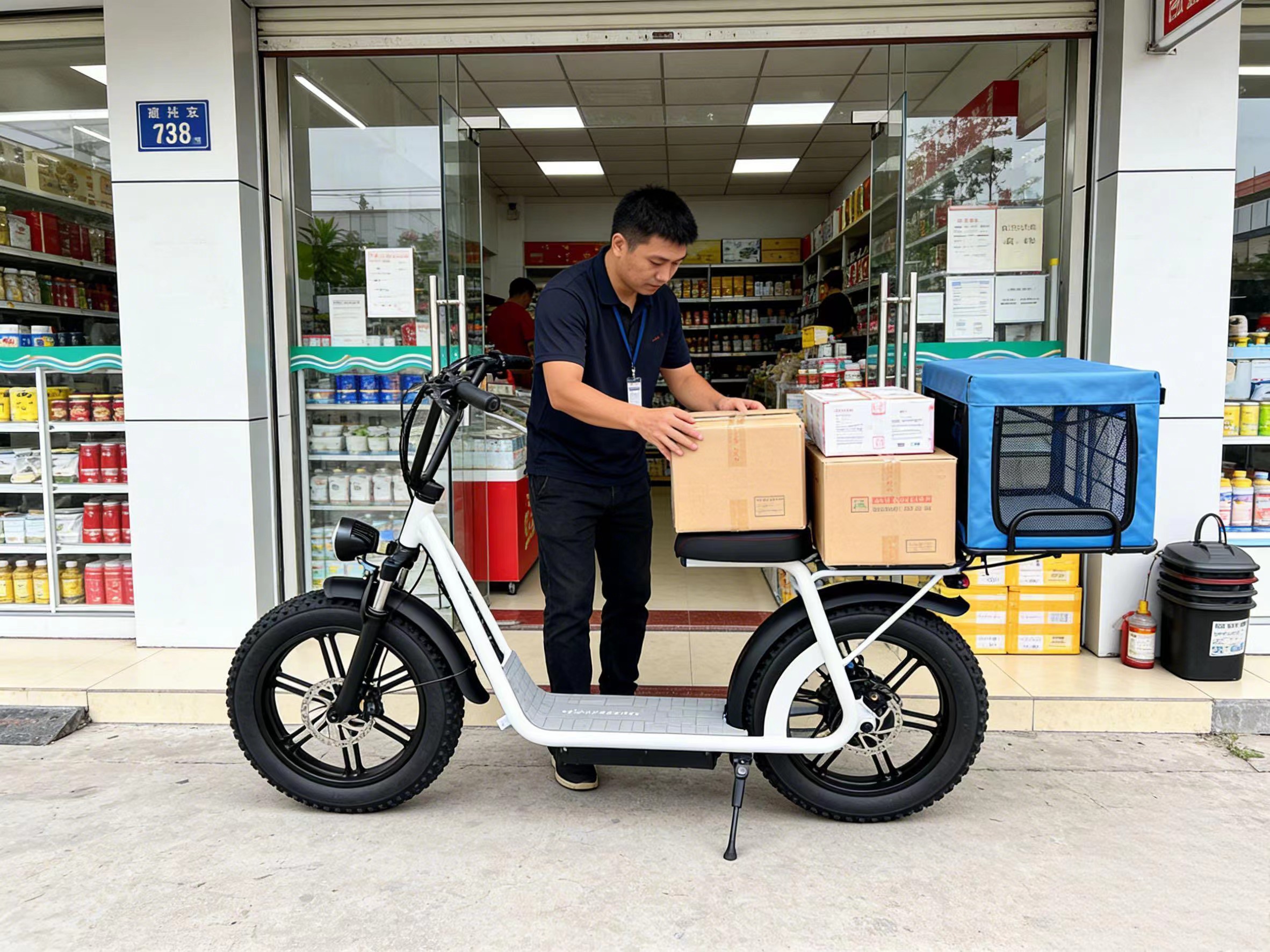
Product Type:Delivery & Commercial Use
Product Introduction:Electric Scooters for Delivery & Commercial Use Electric mobility is increasingly being used for more than personal transp...
Electric mobility is increasingly being used for more than personal transportation. For delivery companies, local businesses, service providers and commercial operators, an electric scooter or electric bike can become a practical tool for short-distance transportation.
The right commercial electric vehicle can help businesses move people, products and equipment through urban environments while reducing the operating burden associated with conventional vehicles.
At Airplaying, we develop electric scooters and electric bikes for different commercial applications, including local delivery, service operations, campus transportation, property management and other short-distance mobility needs.
Commercial transportation is different from recreational riding.
A personal rider may prioritize speed or styling. A commercial operator usually cares more about reliability, operating cost, range, carrying capacity, comfort and ease of maintenance.
For this reason, a commercial electric scooter should be evaluated as a working vehicle rather than simply as a consumer product.
Important considerations include:
A well-designed electric mobility platform can be adapted for different business requirements without changing the fundamental vehicle architecture.
Short-distance delivery is one of the most practical applications for electric mobility.
Restaurants, grocery stores, pharmacies, florists, convenience stores and local retailers often operate within a relatively small geographic area. For these businesses, a compact electric vehicle can provide an efficient alternative for repeated short trips.
Depending on the vehicle configuration, businesses may add:
The objective is not simply to maximize speed. It is to create a vehicle that can complete repeated delivery cycles comfortably and predictably.
Delivery is only one commercial application.
Electric scooters and e-bikes can also be used for:
Property management
Staff can move between buildings, parking areas, warehouses and facilities without relying on a car for every short trip.
Campus transportation
Universities, industrial parks, factories and large facilities may use electric vehicles for internal transportation.
Service businesses
Technicians and service personnel can use electric mobility platforms to carry tools and equipment over short distances.
Warehouse and industrial environments
Where permitted and appropriate, electric vehicles can help personnel move between facilities and operational areas.
Security and patrol
Certain private properties may use electric scooters or e-bikes for routine patrol and inspection.
The suitability of a vehicle depends on the operating environment, load requirements and local regulations.
For commercial applications, several design elements become particularly important.
A commercial vehicle may experience significantly more operating hours than a recreational vehicle. Frame design and material selection therefore become important factors in long-term use.
Larger and wider tires can provide additional stability and comfort on uneven pavement, gravel and other mixed surfaces.
For fleet operators, battery strategy is often as important as battery capacity.
A removable battery can make it easier to:
Commercial riders may spend several hours on a vehicle during a working day. Ergonomics should therefore be considered alongside performance.
A commercial platform becomes more useful when it can accept different cargo solutions according to the business model.
For distributors, rental companies and commercial operators, purchasing a vehicle is only part of the decision.
Fleet operators should also consider:
Airplaying supports B2B customers with electric scooters and e-bikes designed for different commercial requirements, including OEM and ODM projects.
There is no single electric vehicle configuration that fits every business.
A useful starting point is to define:
Once these factors are clear, the appropriate motor, battery, tire, cargo and seating configuration can be selected.
Yes, electric scooters can be suitable for short-distance delivery when the vehicle has appropriate cargo capacity, battery performance, brakes and load rating. Local regulations should always be checked before commercial deployment.
The best model depends on the application. Delivery businesses generally prioritize battery capacity, cargo options and durability, while property and campus operators may prioritize comfort, maneuverability and range.
Yes. Depending on the manufacturer and platform, commercial configurations can include cargo racks, storage boxes, different battery configurations, branding and other OEM/ODM options.
They can be. Removable batteries allow operators to charge batteries separately and potentially maintain spare batteries, which can reduce vehicle downtime.
Yes. Fleet applications can include delivery, property management, campuses, resorts, rental businesses and private facilities, subject to local regulations and operating requirements.