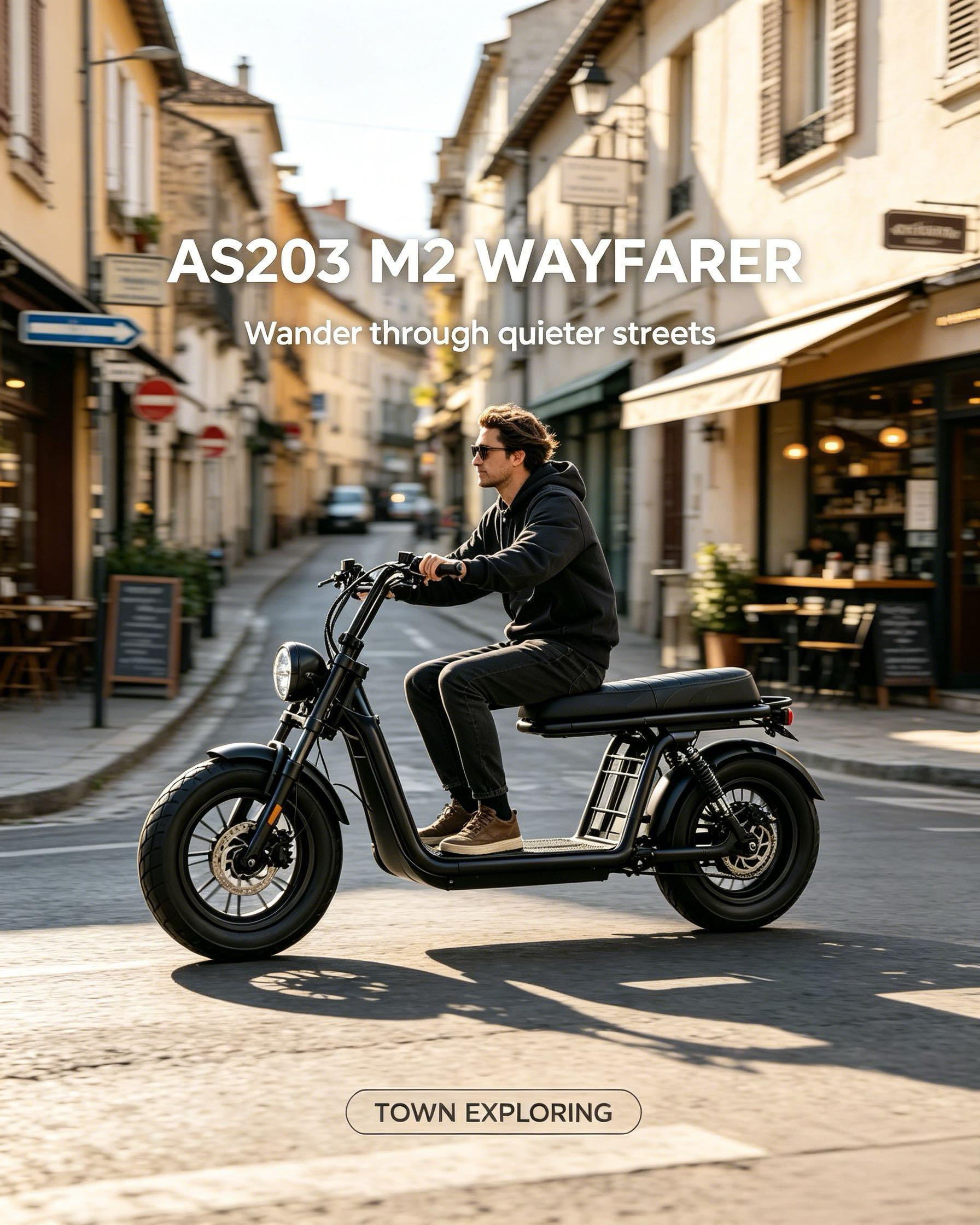
Product Type:Urban Commuting
Product Introduction:Electric Scooters for Urban Commuting Urban commuting is one of the most practical applications for electric mobility. Many d...
Urban commuting is one of the most practical applications for electric mobility.
Many daily trips are relatively short. Going to work, shopping, visiting nearby businesses or connecting between public transportation stops often does not require a full-size car.
An electric scooter or e-bike can provide an alternative for these journeys when local laws, road conditions and infrastructure make it appropriate.
A commuter vehicle needs to work repeatedly.
A rider may use the same vehicle five or more days per week, so long-term practicality is often more important than a single performance specification.
Key considerations include:
Many urban trips are relatively short.
A vehicle may be used for:
For these applications, convenience can matter more than maximum speed.
Battery capacity is one of the most frequently discussed specifications.
However, battery capacity alone does not determine real-world range.
Actual range depends on:
For example, frequent high-speed acceleration can consume substantially more energy than steady moderate-speed riding.
Therefore, buyers should compare battery specifications together with the vehicle’s intended use.
A removable battery can be particularly useful for urban commuters who live or work in buildings without convenient charging areas.
Instead of bringing the entire vehicle indoors, the rider can remove the battery and charge it separately, provided the vehicle is designed for this use.
This can be useful for:
For B2B customers, removable batteries can also simplify inventory and fleet charging strategies.
A commuter may spend hundreds of hours on a vehicle every year.
Small differences in:
can become significant over time.
This is why commuter vehicles should be evaluated based on the complete riding system rather than motor power alone.
Modern urban mobility is becoming less specialized.
A rider may use the same vehicle for:
Morning: commuting to work.
Lunch: traveling to a nearby restaurant.
Afternoon: visiting a customer.
Evening: shopping on the way home.
A practical electric vehicle therefore benefits from flexible storage, comfortable seating and sufficient battery capacity.
This is also consistent with the direction of your existing Blog content, where your site is already discussing the move toward multi-scenario electric mobility rather than viewing scooters only as simple commuting products.
For distributors and retailers, commuter electric scooters represent a broad application category.
Potential customer groups include:
This makes urban commuting an important application category for a B2B electric mobility manufacturer.
The best commuter scooter depends on distance, road conditions, storage requirements, local regulations and charging access. Comfort, braking, battery capacity and reliability are usually more important than maximum speed.
Range varies significantly depending on battery capacity, rider weight, speed, terrain, temperature and riding style. Manufacturer range figures should be viewed as estimates under specified test conditions.
Yes. It can be particularly useful for riders who cannot conveniently charge the vehicle where it is parked.
They can be, provided the vehicle is appropriate for the rider’s route and complies with applicable local laws and regulations.